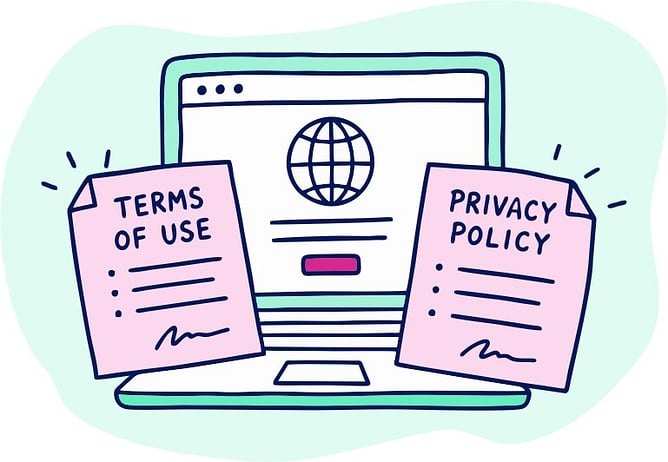
Terms of Use and Privacy Policy
Even the most basic website needs these policies, or a combination of them.
Terms of Use
Website Terms of Use Policies tell the user of the website what limitations are placed on their use of the website, such as:
The user can’t hold the owner responsible for information they see on the website.
The owner can’t promise the website is virus-free, and the user uses it at their own risk.
They can’t copy the original work on the website without permission (copyright statement).
In addition, Terms of Use can cover age restrictions, the governing law etc.
Disclaimer Terms (like the first two above) are useful for protecting the website owner from complaints by users. A copyright statement, accompanied by an up-to-date copyright notice (© plus the date at the bottom of each page), can help protect owners from copyright breaches.
Privacy Policy
A Privacy Policy is required because:
Under the Privacy Act 2020, all agencies that collect personal information must comply with the Privacy Principles in the Act. Agencies include all businesses and similar organisations like charities. Personal information is information about an identifiable individual and can include things like names, email addresses and IP addresses.
All websites collect personal information, whether via cookies, visitor tracking tools or contact forms such as those inviting visitors to sign up to a mailing list or for a freebie.
Privacy Principles require agencies to state what they’re collecting information for, what kind of information they’re collecting, where the information is stored and how users can ask for access to their information so they can correct it.
There are penalties and other enforcement measures that can be taken by the Privacy Commissioner in case of privacy breaches in New Zealand.
On top of this, if you’re a New Zealand organisation marketing to EU-based users, then you need to consider getting specific advice on complying with the European Union’s General Data Protection Regulation because the GDPR’s jurisdiction extends to organisations outside the EU!
Privacy compliance is a separate matter to electronic communications (or spam), where the law requires a sender to get consent before sending someone a commercial communication. If you’re adding users to a mailing list, you need express consent under spam laws.
Privacy and Social Media Advertising
Digital marketing for a business often includes using social media or online advertising to market goods and services. This means using retargeting tools such as Facebook and Google to retarget ads to potential customers.
If a website build includes retargeting tools this should be covered in the privacy policy because the tools collect personal information. A privacy policy should tell users how they can opt-out or otherwise change their settings, if they don’t want to be targeted by advertising away from the website.
Website owners are expected to know and understand the tools used in their websites and address them correctly in the privacy policies.
Compliance is good marketing
Having the right terms and policies in place gives a website credibility and engenders trust with website visitors. It’s putting your best foot forward with your online shopfront!
About the author
Tamara Liebman owns Calibrate Legal, a law firm specialising in commercial and company advice for small businesses and charities. She firmly believes that small organisations should be able to benefit from pragmatic, friendly commercial advice at a reasonable cost.
Tamara can be found at her website calibratelegal.nz